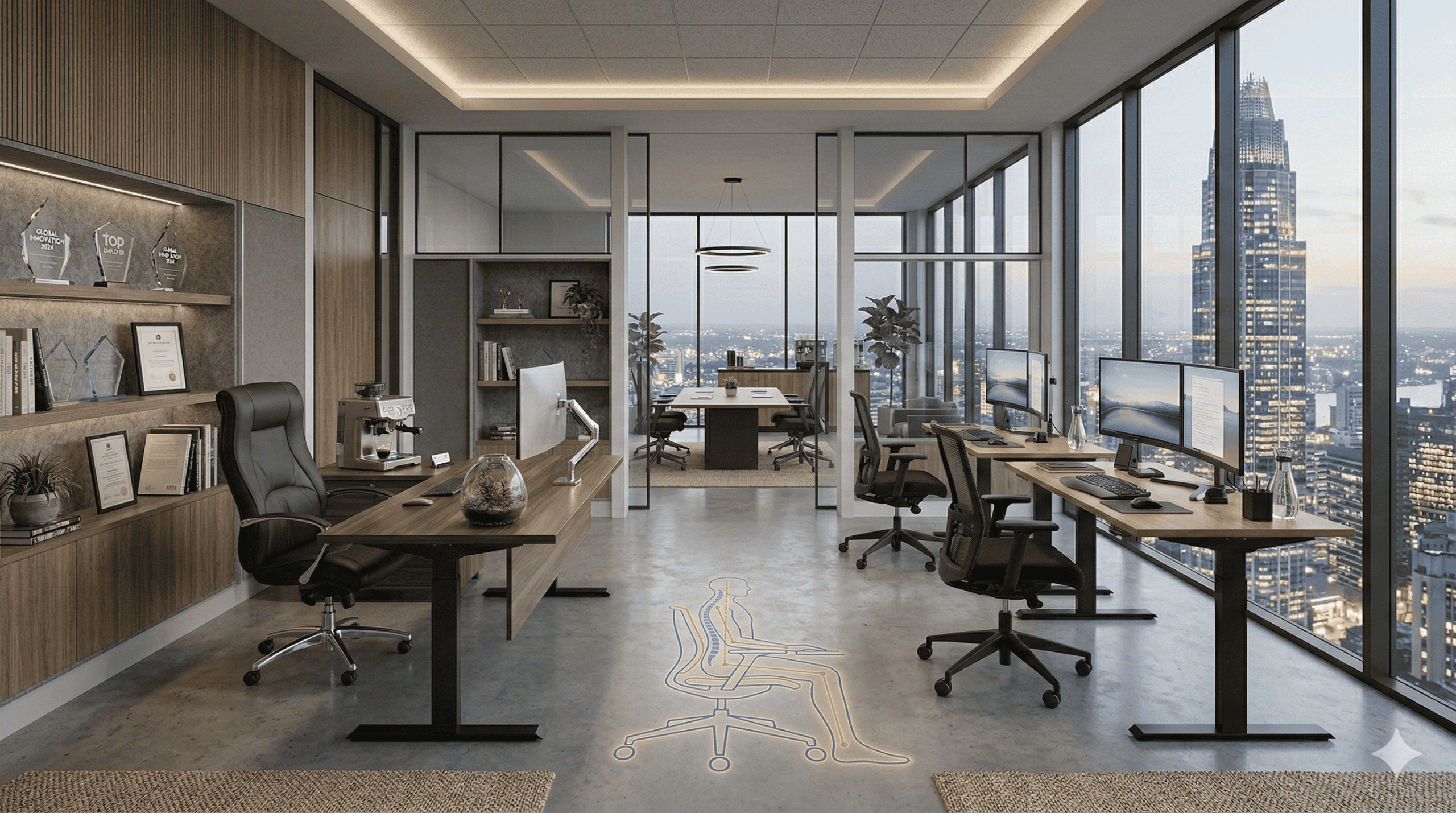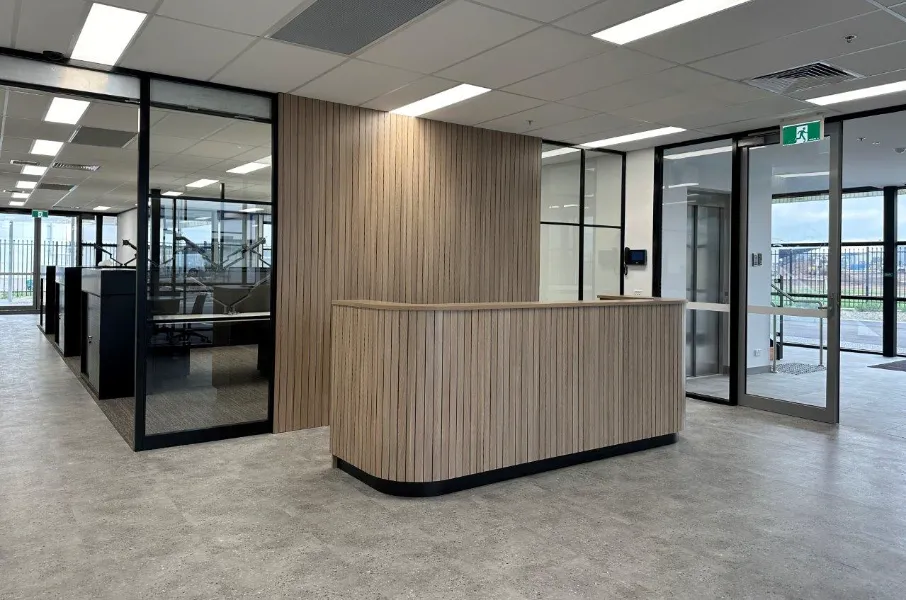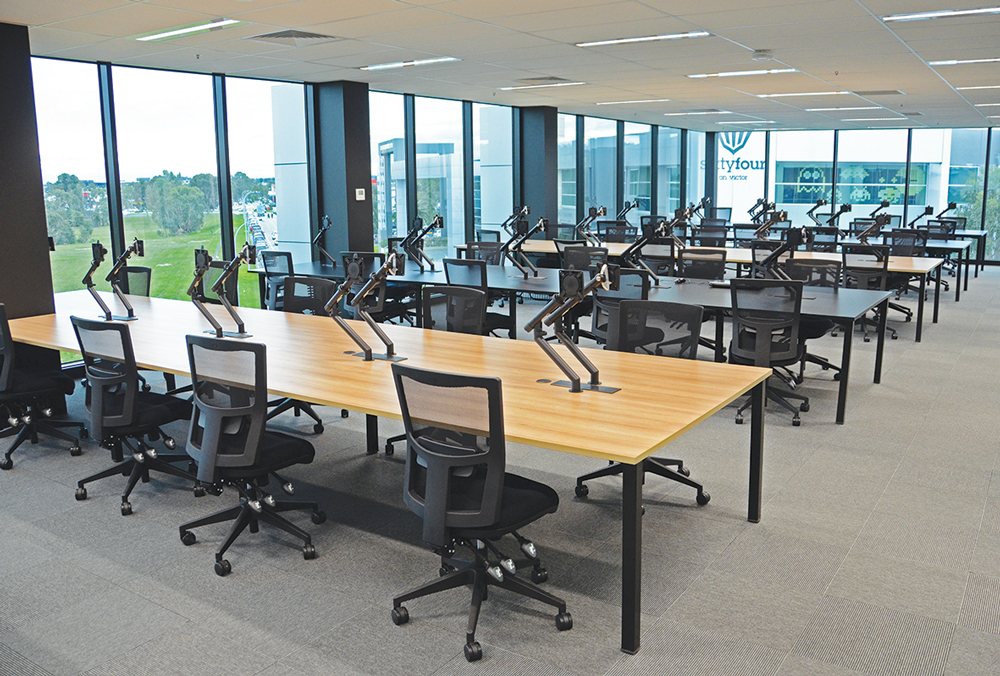

Here’s something we see all the time.
A business spends months planning their new office fitout. They agonise over the reception desk. They test twelve different task chairs before picking one. They spend three separate meetings deciding on the carpet.
Then they get to the boardroom and order whatever table fits the space, grab some chairs that look decent in the catalogue photo, and call it done.
Two years later, the boardroom looks tired, the chairs are uncomfortable after 40 minutes, and every important client meeting happens in a room that quietly undersells everything the business actually does.
The boardroom is where deals get made, clients get impressed, and leadership decisions happen. It is, in many ways, the most important room in your office. Yet it consistently gets less design attention than the spaces people occupy all day.
This guide fixes that. We’re going to walk through every type of meeting space — from the formal boardroom to the casual huddle room — and give you a practical, honest buying guide for the furniture that goes in each one.
Whether you’re planning a full office fitout, upgrading a tired boardroom, or trying to work out how to furnish three different meeting rooms on a realistic budget — this is the guide you need before you buy anything.
Why Meeting Room Furniture Deserves More Thought Than It Usually Gets
The First Impression Problem
Clients form opinions about your business before anyone in the room has opened their mouth. The quality of your boardroom furniture, the condition of the table, the comfort of the chairs, the overall feel of the space — all of this registers in the first thirty seconds of walking through the door.
A boardroom that feels premium, cohesive, and well-considered signals that your business pays attention to detail. A boardroom with a scratched laminate table, mismatched chairs, and cabling hanging off the edge signals the opposite — regardless of how impressive your actual service or product is.
We’ve worked with Melbourne professional services firms, financial advisors, engineering companies, and tech businesses across the full spectrum of this. The businesses whose boardrooms match the quality of their work carry themselves differently in client meetings. The room does some of the selling before the pitch even starts.

The Productivity Problem
This one is less visible but just as real. Sit in an uncomfortable chair for two hours and see how sharp your decision-making is in the back half of that meeting. The answer is: less sharp than it would be if you were comfortable.
Meeting room chairs that look impressive but provide no lumbar support, or that are the wrong height for the table, or that have armrests that catch on the table edge every time someone shifts position — these are daily sources of friction that affect how meetings actually go.
Poor acoustic performance in hard-surfaced meeting rooms makes conversations harder to follow and video calls almost unusable. The wrong table shape for a room creates sightline issues that make collaboration harder. These are furniture problems with productivity consequences.
The Cost of Getting It Wrong
Meeting room furniture bought without proper thought tends to need replacing much sooner than it should. A boardroom table purchased without considering durability, technology integration, or the scale of the room relative to seating requirements creates problems that compound over time.
Replacing boardroom furniture mid-lease is disruptive and expensive. Custom tables have long lead times. The disruption to a room that’s in use every day is significant. Getting the decision right the first time is much cheaper than getting it approximately right and fixing it later.
Types of Meeting Spaces — Getting the Brief Right Before You Buy
Modern Melbourne offices don’t just have one type of meeting space anymore. The furniture brief for a boardroom is completely different to the brief for a huddle room or a training room. Getting clear on what each space is for, before you buy anything, is the most important step in the whole process.
The Traditional Boardroom
The boardroom is the formal meeting space — for senior leadership meetings, board sessions, high-stakes client presentations, and any occasion that requires a room that projects authority and quality. Typically seats 10–20 people, though Melbourne CBD boardrooms can go larger for major corporate tenants.
Design expectations are high. Clients and board members who walk into your boardroom expect it to feel like the headquarters of a business that takes itself seriously. Prestige materials, consistent design language, integrated technology, and carefully chosen furniture that works together as a whole.
Furniture priorities: boardroom table, executive or meeting chairs, credenza or sideboard, AV furniture or integrated display solution.
The Standard Meeting Room (4–8 Person)
These are the workhorses of any commercial office. Used for team meetings, client briefings, interviews, one-on-ones, video calls, and a dozen other purposes every day. In most Melbourne offices, these rooms are booked out most of the time.
The key requirement here is flexibility. These rooms serve too many different purposes for rigid, highly specific furniture. A table that works for a four-person team meeting and an eight-person client presentation. Chairs that are comfortable for a 90-minute session. A writable surface or display that supports both physical and digital collaboration.
Furniture priorities: meeting table, chairs, writable surface, AV display or screen, basic storage.
The Huddle Room or Small Collaboration Space (2–4 Person)
The fastest-growing meeting space category in Melbourne office fitouts right now. Small, informal spaces designed for quick team check-ins, focused collaboration, client calls, and the kind of conversations that don’t need a full meeting room but can’t happen on the open floor.
Traditional meeting room furniture doesn’t work here. The rooms are too small for a standard meeting table and four chairs. The vibe is wrong — huddle rooms should feel comfortable and informal, not like a miniaturised boardroom.
Furniture priorities: compact table or no table at all, lounge or soft seating, a screen or display, acoustic treatment, and enough technology integration for a clean video call.

The Training Room or Multipurpose Space
Rooms that need to work as a classroom, a boardroom, a workshop, a town hall, and sometimes a social space. Flexibility isn’t just nice to have here — it’s the entire point of the room.
The furniture brief is almost entirely about reconfigurability. Folding or flip-top tables that can be arranged in rows, a U-shape, or clusters. Stackable chairs that store flat when the room needs to be cleared. Lightweight enough to move quickly without specialist equipment.
Furniture priorities: folding or flip-top tables, stackable chairs, storage trolleys, AV and presentation setup.
The Video Conferencing Suite
A purpose-built space for high-quality video meetings. Not every office needs one, but for businesses where remote collaboration is central to how they work — and that’s an increasing number of Melbourne organisations — a dedicated video conferencing suite delivers meaningfully better results than a standard meeting room repurposed for video.
Furniture choices directly affect video and audio quality in ways that most buyers don’t anticipate. Table shape affects camera sightlines. Chair positioning affects whether remote participants can see everyone in the room. Surface materials affect acoustic performance and, therefore, call quality.
Furniture priorities: purpose-designed video conferencing table, acoustic panels and treatment, integrated AV furniture, chairs positioned for camera coverage.
Informal Meeting and Collaboration Zones
Not all meetings need a meeting room. Breakout areas with soft seating, high tables with bar stools, lounge zones with screens — these spaces handle the overflow from formal meeting rooms and the informal conversations that move things forward.
In activity-based Melbourne offices, these informal meeting zones are used constantly. The furniture needs to be comfortable for 20–60 minute conversations, durable enough for heavy daily use, and versatile enough to serve different group sizes.
Furniture priorities: modular soft seating, high tables and stools, screens or writable surfaces, acoustic booths or pods for private conversations.
Boardroom Tables — The Most Important Furniture Decision in Your Meeting Room
The boardroom table is the centrepiece of the most important room in your office. It deserves more specification attention than almost any other furniture purchase. Here’s how to get it right.
Size — The Most Common Mistake
If there’s one boardroom furniture mistake Melbourne businesses make more than any other, it’s this: the table is too big for the room.
It happens because businesses focus on seating capacity without thinking about the full room experience. They want to seat 16 people, so they spec a table that seats 16. The table arrives and fills the room so completely that the chairs can barely push back from the table edge. People in the corner seats feel trapped. Moving around the room during a meeting becomes an obstacle course.
The rule to follow: allow at least 900mm — ideally 1,000–1,200mm — of clear space between the edge of the table and the nearest wall or obstruction. This is the minimum comfortable clearance for people to move freely around the room and push back from the table without hitting the wall.
Then work out table size from the remaining space. Not the other way around.
For seating allocation along the table, allow 600–700mm of table edge per person as a minimum. For a 12-person table where people will be sitting for long meetings with documents and laptops, 700–750mm per person is more comfortable.
If the room genuinely can’t accommodate the table size you need for your target seating capacity, you have a few options. Expandable table systems that can seat 10 for a regular meeting and 16 for a board meeting are worth exploring. U-shape and conference configurations using multiple tables can seat more people in a given room footprint than a single large table. And sometimes the honest answer is: this room seats 10, not 16, and that’s what it seats.
Shape — More Than an Aesthetic Choice
Boardroom table shape affects how meetings feel, how decisions get made, and — increasingly — how well the room works for video conferencing.
Rectangular tables are the traditional boardroom shape. They’re space-efficient for a given seating capacity, suit formal hierarchical meetings where there’s a clear head of the table, and work well in rooms with a defined presentation end. The limitation is that end-of-table participants can feel remote from the conversation in longer tables.
Oval and boat-shaped tables soften the formality of a rectangular table while maintaining a sense of direction. Better sight lines than a rectangle — everyone can see everyone else more easily. A popular choice for professional services firms that want authority without excessive rigidity.
Round tables work beautifully for smaller groups — 6–8 people — where equal participation is the goal. There’s no head of the table, which changes the dynamic of decision-making discussions. They’re not practical for large boardrooms because a round table large enough to seat 14 people is a very large round table indeed.
Racetrack tables — a rectangle with rounded ends — are the most popular shape in new Melbourne boardrooms right now. They combine the space efficiency and formality of a rectangle with the inclusive feel and better sight lines of an oval. They also work well for video conferencing because the camera can be positioned at one end with all participants visible in a single frame.
For video conferencing specifically, avoid long, narrow rectangular tables where participants at the far end appear tiny on screen. Shorter, wider tables — or boat and racetrack shapes — keep everyone within a reasonable camera field. This is increasingly a practical requirement, not just a design consideration.
Materials and Finishes — Communicating the Right Message
The surface material and finish of your boardroom table communicates something about your business before anyone at the meeting says a word. Different materials send different messages.
Timber veneer is the classic boardroom choice. It conveys warmth, prestige, and substance. Natural timber grain has a quality that no synthetic material fully replicates. It suits law firms, financial services, engineering companies, and any business that wants its boardroom to project established authority. The care requirement is real — veneer surfaces need to be protected from moisture, heat, and impact — but a well-maintained veneer boardroom table looks exceptional for decades.
Laminate is the practical workhorse of commercial meeting room surfaces. Modern high-pressure laminates are available in an enormous range of finishes — including very convincing timber and stone effects — and they’re far more forgiving of daily use than veneer. Scratch resistant, easy to clean, and consistently available in the same specification for future matching. For businesses that want a professional boardroom without the fragility and maintenance requirements of veneer, quality laminate is a completely respectable choice.
Glass tops are striking and visually distinctive — you’ll often see them in architecture firms, design studios, and creative agencies where the aesthetic statement is part of the point. The maintenance reality is that glass shows every fingerprint, every ring mark from a coffee cup, and every smear. In a boardroom used multiple times a day for client meetings, that’s a significant cleaning burden. Beautiful, but high maintenance.
Stone and stone-effect surfaces — granite, marble, sintered stone like Dekton or Neolith — are premium statement pieces. Genuinely stunning in the right context, genuinely heavy, and genuinely expensive. For a large boardroom table, the base structure needs to handle serious weight. Stone and stone-effect surfaces are appropriate for businesses making a deliberate statement about premium positioning and are willing to invest accordingly.
Painted MDF and lacquer finishes work well in contemporary fitouts where the boardroom aesthetic is clean, minimal, and colour-matched to the broader design scheme. Matte lacquer in particular has a sophisticated quality that suits modern corporate environments. Less traditional-feeling than timber, but genuinely premium when done well.
Edge profiles and base options are worth thinking about too. A thick, solid edge communicates substance and quality. A thin, knife-edge profile communicates precision and modernity. The table base — whether pedestal legs, a central spine, or perimeter legs — affects both the aesthetics and the practical usability of the table, particularly for chair placement and legroom at the corners.
Technology Integration — Get This Sorted at the Specification Stage
Nothing dates a boardroom faster than technology that doesn’t work, cables that trail across the table, or power modules that look like they were retrofitted by someone who’d rather be somewhere else.
Technology integration in a boardroom table needs to be designed at the specification stage — not added after the table has been built and delivered. Changes to a custom table after manufacture are expensive or impossible.
Pop-up or recessed power and data modules are now standard in any serious Melbourne boardroom specification. Positions should be mapped against the expected seating plan and technology usage — how many people will need power simultaneously, where will laptops be connecting, where does HDMI or USB-C need to be accessible for presentations.
Cable management through recessed channels in the table surface, with provision to route cables cleanly to a floor box or wall plate, keeps the table looking clean during meetings rather than like a cabling exercise.
The connectivity standard in 2025 is HDMI and USB-C as a minimum, with wireless presentation capability (like Barco ClickShare or similar) increasingly expected. If your table is being custom manufactured, specify the exact connectors you need and get them built in rather than using surface adaptors.
One important caution: technology changes faster than furniture. A table built to last twenty years will outlive several generations of connection standards. Build in what you need now, but don’t over-engineer technology integration to the point where the table becomes obsolete when display standards change. Wireless presentation technology reduces the dependency on built-in cable connections and future-proofs the room more effectively than spec’ing every possible connector into the table.
Coordinate your AV contractor and your furniture supplier together at the design stage. We see projects go wrong regularly when these two are working independently and the table arrives with cable channels that don’t connect to where the AV contractor ran the conduit. One conversation early saves significant expense and frustration later.
Boardroom Table Cost Ranges for Melbourne Businesses
Boardroom tables have the widest cost range of almost any commercial furniture category. Here’s a realistic guide:
- Entry-level commercial boardroom table (10–12 person, laminate finish): $2,000–$5,000
- Mid-range boardroom table (10–14 person, quality laminate or veneer): $5,000–$12,000
- Premium boardroom table (12–16 person, timber veneer, integrated technology): $12,000–$25,000
- Custom joinery boardroom table (bespoke shape, premium materials, full technology integration): $20,000–$60,000+
What drives cost up: size, premium surface materials (veneer, stone, glass), technology integration, custom shapes, and base complexity. What keeps cost reasonable: quality laminate finishes, standard shapes, and sourcing from established commercial furniture suppliers rather than custom joinery specialists for mid-range requirements.
Meeting Room and Boardroom Chairs — More Important Than Most Buyers Realise
Here’s the honest truth about meeting room chairs: most businesses choose them primarily on aesthetics, and most businesses end up with chairs that aren’t comfortable enough for the meetings that matter most.
A two-hour board meeting in a chair with inadequate lumbar support, armrests at the wrong height, or a seat pan that’s too hard affects every person in that room in the back half of the session. People shift around. They lose focus. Decision-making quality drops. These are real effects from an apparently minor furniture decision.
Meeting room chairs don’t need the full ergonomic specification of an all-day task chair. But they do need to be genuinely comfortable for sessions of 60–120 minutes. That’s a higher bar than most meeting room chairs currently meet.
Executive Boardroom Chairs
High-back chairs with substantial construction and premium upholstery. The right choice for formal boardrooms where the visual weight of the chair needs to match the visual weight of the table and the room.
The risk with executive boardroom chairs is over-speccing for the room. A large high-back executive chair in a small 8-person meeting room overwhelms the space. These chairs suit large boardrooms — 12 seats or more — where the scale of the room justifies the scale of the chair.
Armrest height is a critical specification check for boardroom chairs. The armrests need to sit below the table surface so chairs can push in cleanly to the table edge. Measure the table height, subtract the expected armrest height, and confirm the clearance before ordering. A boardroom table full of chairs that won’t push in because the armrests catch on the table edge is a frustrating daily experience and a surprisingly common fitout mistake.
Cost range for executive boardroom chairs: $600–$2,500+ per chair, depending on specification and upholstery choice.

Mid-Back Meeting Room Chairs
The most versatile and widely used meeting room chair category. Mid-back chairs — back height to the mid-shoulder area — work across a wide range of meeting room sizes and formality levels. Professional enough for client meetings, comfortable enough for longer internal sessions, and not so visually dominant that they overpower smaller rooms.
Swivel chairs with castors allow easy movement around the table during collaborative sessions. Sled base or four-leg chairs have a cleaner, more static look — appropriate for more formal settings where people aren’t expected to move around frequently. For general meeting rooms that serve multiple purposes, swivel with castors is the more practical choice.
Upholstery choice here depends on use intensity and cleaning requirements. Fabric in a commercial-grade weave looks great and is comfortable, but requires periodic cleaning in high-use rooms. Mesh provides better breathability for longer sessions and is easier to maintain. Vinyl or PU leather is the most durable and easiest to clean, which matters in client-facing rooms or any environment where food and drinks are regularly present.
Cost range for mid-back meeting room chairs: $300–$900 per chair for good commercial-grade options.
Visitor and Side Chairs
Four-leg and sled base chairs for visitor seating, supplementary meeting room capacity, and reception areas. These don’t need the full ergonomic specification of a task chair or the prestige specification of a boardroom chair — but they should be comfortable for 30–60 minutes and durable enough for heavy commercial use.
For training rooms and multipurpose spaces, stackability is the key practical requirement. Chairs that stack to 8–10 high on a trolley allow the room to be cleared quickly for different configurations. The trade-off is usually comfort — stackable chairs tend to have less padding and support than non-stackable alternatives. For sessions under 90 minutes, this is acceptable. For longer training days, it becomes a problem.
Cost range for visitor and side chairs: $150–$500 per chair depending on specification and stackability.
Seating for Huddle Rooms and Informal Meeting Spaces
Informal meeting spaces need furniture that signals “relaxed collaboration” rather than “formal meeting.” Low-profile lounge chairs, modular soft seating, and ottomans work for the most casual settings. Mid-height tub chairs and task-style chairs without the full boardroom presence work for spaces that are informal but still require focus.
The practical requirement in huddle rooms and collaboration zones is comfort for 20–60 minute sessions without the sustained support requirement of an all-day task chair. Soft seating that looks inviting but is genuinely supportive for an hour of focused conversation is the brief.
Acoustic properties matter here too. Upholstered seating absorbs sound. In small, hard-surfaced rooms where echo is a problem, choosing upholstered chairs over hard shell chairs makes a measurable difference to how conversations sound and how video calls perform.
Meeting Room Storage and Ancillary Furniture
Credenzas and Sideboards
A credenza along the wall of a boardroom does several things at once. It provides storage for meeting materials, AV equipment, refreshments, and the miscellaneous items that accumulate in heavily used meeting rooms. It provides a surface for catering or equipment setup during meetings. And when it’s designed and finished consistently with the boardroom table, it anchors the room design in a way that makes the space feel complete.
Credenza sizing should be proportional to the room. A credenza that’s too small looks like an afterthought. One that’s too large competes with the table for visual attention. As a guide, a credenza in a 12-seat boardroom typically runs 1.8–2.4 metres in length and 500–600mm in depth.
Housing AV equipment in the credenza — amplifiers, video conferencing processors, cable termination points — is practical and keeps equipment accessible while keeping it out of sight. Credenzas used for AV equipment need ventilation provisions to prevent heat buildup, which can damage equipment and cause system failures during important meetings.
Cost range for boardroom credenzas: $1,500–$8,000+ depending on size, materials, and configuration.
Whiteboards, Glass Boards, and Writable Surfaces
Writable surfaces have made a strong comeback in Melbourne offices as hybrid working has increased the importance of visual collaboration — both for in-room brainstorming and for sharing ideas with remote participants via camera.
Wall-mounted whiteboards are the most practical option for fixed meeting rooms. They don’t take up floor space, can be sized to the wall, and are immediately accessible. The quality difference between a good commercial whiteboard and a cheap one is significant — lower quality boards stain and ghost quickly, making them frustrating to use within 12 months.
Glass boards have a sleek, premium aesthetic that suits contemporary boardrooms. They don’t ghost, clean easily, and last essentially indefinitely. They’re more expensive than whiteboards and require proper wall fixing for safety, but for a boardroom or high-use meeting room, they’re often worth the investment.
Writable wall surfaces — full walls treated with a writable paint or coating — are an increasingly popular choice in creative and collaborative office environments. They create a large, immersive writing surface that encourages free-form ideation. The coating needs to be properly applied and maintained to avoid ghosting.
Mobile and Supplementary Furniture
A few supplementary pieces that are often overlooked in the meeting room furniture specification but make a real difference to how rooms work in daily use:
Mobile presentation stands or lecterns for rooms used for presentations or training. These allow a presenter to stand and reference notes without hovering awkwardly at the end of the table.
Room dividers and acoustic screens for multipurpose spaces that are sometimes split into smaller zones. These need to be genuinely acoustic — lightweight fabric screens provide minimal sound attenuation and are really only appropriate as visual dividers.
Coat hooks, umbrella stands, and basic visitor amenity items. Small things that make a disproportionate impression in client-facing rooms.
Meeting Room Acoustics — The Furniture Dimension
This is a section that a lot of meeting room furniture guides skip, and it’s one of the most practically important topics we can cover.
A meeting room with hard floors, hard walls, a glass table, and hard shell chairs has a reverberation time that makes conversations difficult to follow and video call audio genuinely poor. Sound bounces between hard surfaces and arrives at listeners’ ears as a smeared, reverberant mess. The content of conversations is harder to understand. Video call participants complain about echo. Long meetings become more tiring because the brain is working harder to decode speech.
Furniture choices significantly affect this. Upholstered chairs absorb sound energy. A carpeted floor absorbs sound. A fabric-wrapped credenza or acoustic panels integrated into the room design absorb sound. The more soft, absorptive surface in a room relative to hard, reflective surface, the shorter the reverberation time and the clearer the acoustic environment.
Furniture Choices That Help Acoustic Performance
Upholstered chairs vs. hard shell chairs: the acoustic difference in a small meeting room is meaningful. Eight upholstered chairs provide significantly more sound absorption than eight polypropylene shell chairs. In a room where video calling is frequent, this difference is audible.
A rug or carpet under the meeting table provides floor-level sound absorption that’s often not possible in offices with polished concrete or hard tile floors. In meeting rooms where the floor is hard, a well-specified rug under the table makes a real acoustic difference.
Acoustic panels — fabric-wrapped panels of acoustic foam or mineral wool — can be integrated into meeting room wall furniture and credenza designs as well as mounted directly on walls. Planning acoustic treatment at the furniture specification stage, rather than as an afterthought, produces better-looking and better-performing results.
When to Specify Dedicated Acoustic Furniture
Acoustic booths and pods for small meeting spaces provide a fully enclosed or semi-enclosed acoustic environment that handles both background noise isolation and internal reverberation. For Melbourne offices where meeting rooms are in short supply and small breakout conversations frequently happen on the open floor, acoustic pods are increasingly the practical solution.
Cost ranges for acoustic meeting pods vary significantly by size and specification — from around $3,000 for a basic single-person phone booth to $15,000+ for a fully enclosed four-person meeting pod with integrated AV.
Video Conferencing and Technology Integration — The Modern Meeting Room Standard
Post-pandemic Melbourne offices have fundamentally changed how meetings work. Video-first meetings — where some participants are in the room and others are remote — are now the norm, not the exception, across almost every industry.
This has changed what meeting room furniture needs to do. A boardroom table designed in 2015, before video-first meeting culture, often doesn’t perform well in a video-heavy 2025 meeting environment. Understanding how furniture choices affect video meeting quality is now a core part of the meeting room furniture brief.
Table Shape and Camera Sightlines
The camera positioned at the end of a meeting room needs to capture all in-room participants clearly for remote attendees. Some table shapes make this easier than others.
Long, narrow rectangular tables are the most problematic for video conferencing. Participants at the far end of a long table appear small and distant on camera. Side participants can be partially obscured by people sitting between them and the camera. The camera angle needed to cover a long table means that the room behind participants is mostly empty ceiling and wall.
Shorter, wider tables — boat shapes, racetrack shapes, and wider-format rectangles — keep all participants within a more useful camera angle. Tables specifically designed for video conferencing rooms are typically shorter and wider than standard boardroom dimensions, positioning all participants closer to the camera and within a field of view that captures faces rather than the backs of heads.
Round tables are poor for video conferencing because the camera can only cover one arc of the circle cleanly. Participants on the camera-side of the table face away from the screen showing remote participants. In a standard video call setup, this means some in-room participants are looking at the screen (and therefore at remote participants) while others have their backs to it.
Screen Placement and Furniture Considerations
Display screens in meeting rooms need to be positioned so that in-room participants can see them clearly without significant head rotation,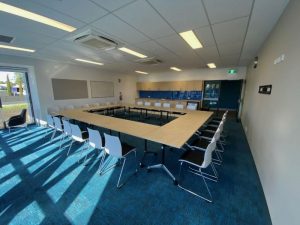 and so that remote participants on the screen appear at approximately eye level for in-room participants.
Wall-mounted displays at the end of a meeting room are the standard. The furniture implication is that the wall area behind the display end of the table needs to be kept relatively clear — which affects credenza placement, whiteboard positioning, and any other wall furniture at that end of the room.
For larger rooms, dual displays — one for content sharing and one for remote participant video — are increasingly standard. The furniture and room layout need to accommodate both displays at appropriate heights and in positions that don’t create awkward sightline compromises.
Power and Data Integration for Video Conferencing Rooms
Video conferencing rooms have higher technology integration requirements than standard meeting rooms. In addition to laptop power and standard data connections, you need HDMI and USB-C connections for the video conferencing system, power for the room controller (typically a touch panel), power for the camera and speaker bar, and potentially power for a wireless presentation receiver.
All of this needs to be mapped out at the furniture specification stage and coordinated with the AV contractor. The table power and data module positions need to connect cleanly to where the AV contractor is running conduit. The credenza or AV cabinet needs ventilation and power provisions for the equipment housed in it.
The businesses getting Melbourne video conferencing rooms right in 2025 are the ones where the furniture designer, AV consultant, and fitout project manager are in the same conversation from day one.
Meeting Room Furniture for Different Industries and Business Types
Professional Services — Legal, Finance, and Consulting
For Melbourne’s law firms, financial advisors, accounting practices, and management consultancies, the boardroom is a trust signal. Clients making significant financial or legal decisions are partly doing so based on whether the people advising them seem like the kind of organisation that deserves their trust. The boardroom is part of that picture.
Premium materials are justified at this level. Timber veneer or quality stone-effect surfaces. Executive chairs in quality fabric or leather. A credenza that finishes the room. Integrated technology that works flawlessly.
Custom joinery is worth considering for professional services boardrooms in Melbourne — a bespoke table designed for the specific room and brand creates something that mass-produced furniture can’t replicate. The investment is significant but the return, measured in client confidence, is real.
Technology and Creative Industries
Melbourne’s tech companies, creative agencies, and design studios tend to move away from traditional boardroom aesthetics. The visual language of authority expressed through heavy timber and high-back chairs doesn’t suit organisations that want to communicate agility, creativity, and forward-thinking.
Flexible, collaborative meeting spaces often serve better than a single formal boardroom. Multiple 6–8 person rooms that can be configured in different ways. Standing meeting areas with high tables. Lounge meeting zones with soft seating and screens. The furniture mix reflects how the organisation actually works rather than how it thinks a serious business should look.
Material choices tend to be bolder — brighter colours, mixed materials, furniture that makes a statement about the company’s identity. This is entirely appropriate when the brief is to express creativity and energy rather than stability and authority.
Co-Working Spaces and Flexible Offices
Meeting rooms in co-working environments are revenue-generating assets. They need to look professional, function reliably, and withstand significantly more intensive use than meeting rooms in a single-tenancy office.
Durability is the primary specification driver. Table surfaces need to handle heavy daily use without showing wear. Chairs need to withstand many different users of different sizes and usage patterns. Technology needs to be foolproof — co-working meeting room users don’t have an IT department to call when the HDMI connection doesn’t work.
Standardisation across rooms reduces the friction of moving between spaces. When every meeting room has the same chair type, the same display, and the same connection standard, users don’t need to figure out a new room every time they book. That consistency is a competitive advantage for co-working operators.
Small Businesses and Startups
Not every Melbourne business can afford a dedicated boardroom. For small businesses and startups, the question is often: how do we create a professional meeting environment without the budget for a full boardroom fit-out?
The answer usually involves a multipurpose meeting space that serves as the boardroom when needed but handles daily team meetings for the rest of the time. A quality table that seats 8–10, comfortable chairs, a screen, and a writable surface. Not custom joinery, but not cheap either — mid-range commercial furniture from a reputable supplier that projects professionalism.
Phased investment makes sense here too. Start with the table, chairs, and display. Add the credenza and acoustic treatment when the budget allows. Build towards a complete room over 12–18 months rather than compromising on the core pieces to afford everything at once.
What to Evaluate Before You Commit
Durability and Commercial Standards
Meeting room furniture gets intensive use. A 10-seat boardroom used for three one-hour meetings per day, five days a week, accumulates 780 meeting-hours per year. The table surface, the chair mechanisms, and the upholstery all need to perform reliably under that load.
For chairs, AFRDI Level 6 certification is the minimum standard for commercial meeting room use. For tables, look for a commercial warranty of at least 5 years on structural components and verify that the surface finish specification includes scratch and stain resistance ratings appropriate for commercial use.
Table surface heat resistance is worth checking specifically. Coffee cups, laptops, and occasionally hot food get placed on boardroom tables in every Melbourne office. A surface that marks from heat rings significantly degrades the appearance of a premium boardroom in a short time.
Flexibility and Reconfigurability
For standard meeting rooms and multipurpose spaces, flexibility is a real and valuable feature. Folding tables, stackable chairs, and modular table systems allow rooms to serve multiple configurations.
But flexibility comes at a cost — both in price and in the quality of fixed-use experience. A folding table is never as substantial or as polished as a fixed boardroom table. Stackable chairs are rarely as comfortable as non-stackable meeting chairs. The question to ask is: will this room actually be reconfigured, and how often? If the honest answer is “probably not that often,” the premium for flexible furniture may not be justified.
Aesthetic Consistency With the Broader Office
Meeting room furniture shouldn’t look like it was chosen in isolation from the rest of the office. When the boardroom table finish, the chair upholstery, and the credenza materials are consistent with the design language of the broader fitout — the reception, the open floor, the kitchen — the office feels like a coherent whole.
This doesn’t mean everything needs to match. A boardroom can use more premium materials than the open floor and still feel connected to the overall design. What doesn’t work is when the boardroom looks like it belongs to a different company — different colour palette, different material quality, no visual connection to the rest of the office.
Lead Times and Project Coordination
Custom boardroom tables have lead times of 8–14 weeks in most cases — sometimes longer for complex shapes or premium materials. If your fitout is scheduled to complete in ten weeks, a custom table ordered at the start of construction will arrive approximately when the space is ready. A custom table ordered when the construction is half-finished will not.
This is a coordination problem that causes significant disruption in fitout projects that aren’t carefully managed. The business moves in, the office is complete, and the boardroom has a temporary table for six weeks while the custom piece is manufactured.
Order meeting room furniture — particularly custom pieces — as early in the fitout process as the design is confirmed. Standard stock items have much shorter lead times (typically 2–4 weeks) but still need to be coordinated with fitout completion and AV installation.
Meeting Room Furniture Cost Guide for Melbourne Businesses
Here are realistic budget ranges for complete meeting room furniture packages. These are indicative figures — actual costs vary based on specification, quantity, and supplier.
Cost Ranges by Room Type
- Full boardroom setup (12 person — table, executive chairs, credenza): $20,000–$60,000+
- Standard meeting room setup (8 person — table, chairs, display): $6,000–$18,000
- Huddle room setup (4 person — compact table or soft seating, screen): $3,000–$8,000
- Training room setup (20 person, flexible — folding tables, stackable chairs): $8,000–$20,000
- Video conferencing suite (purpose furniture and AV integration): $15,000–$40,000+
Where to Invest and Where to Save
Always invest more in: the boardroom table (this is not the place to save), boardroom and meeting room chairs (comfort in long sessions is non-negotiable), and AV integration (technology that doesn’t work in front of clients is more expensive than any furniture).
Can reasonably save on: training room and multipurpose furniture (flexibility matters more than prestige here), supplementary storage, and informal breakout furniture where durability matters more than premium aesthetics.
Never compromise on: commercial-grade specification for chairs and tables, surface durability for high-use rooms, and chair comfort for any room where sessions regularly exceed one hour.
Common Meeting Room Furniture Mistakes Melbourne Businesses Make
We’ve seen a lot of meeting room fitouts across Melbourne over 27 years. Here are the mistakes we see most often — and that are most worth avoiding.
- Choosing a table that’s too large for the room. The single most common boardroom furniture mistake. Measure your clearances before you specify a table size.
- Buying chairs that look impressive but are uncomfortable after 30 minutes. Test chairs for a full meeting session before committing to a bulk order.
- Specifying meeting room furniture without considering technology integration. AV requirements need to be designed into the table and room layout — not retrofitted after.
- Ordering custom pieces without enough lead time. 8–14 weeks for custom boardroom tables is standard. Factor this into your fitout programme.
- Choosing different chair styles for different meeting rooms with no design cohesion. Consistent chair specification across meeting rooms looks significantly more professional.
- Ignoring acoustic performance. Hard surfaces in meeting rooms make conversations and video calls harder. Upholstered chairs, rugs, and acoustic panels make a real difference.
- Not planning cable management at the table specification stage. Surface cable chaos is avoidable with proper specification. Retrofitting cable management after the table is built is expensive and rarely looks good.
- Choosing upholstery that can’t be properly cleaned in client-facing rooms. Fabric looks great but needs periodic professional cleaning. Vinyl and mesh are easier to maintain in high-use environments.
- Buying training room furniture too cheaply. Cheap folding tables and stackable chairs wear out quickly in high-use environments. Commercial-grade specification matters even for utilitarian rooms.
Planning a Boardroom or Meeting Room Fitout in Melbourne? Let’s Talk.
At Progressive Corporate, we’ve been specifying and supplying boardroom and meeting room furniture across Melbourne for over 27 years. We’ve furnished boardrooms for Telstra, Kia, Commonwealth Bank, RMIT, and hundreds of small and mid-size businesses across the city. We know what works, we know what doesn’t, and we know the mistakes that are most worth avoiding before you spend your budget.
We handle everything from a single meeting room upgrade to a full multi-room fitout across an entire floor — tables, chairs, credenzas, acoustic furniture, storage, and AV integration coordination. And because we also manage full office fitouts, we can align your meeting room furniture selection with your broader fitout design and construction, so everything arrives at the right time, goes in the right place, and looks like it belongs together.
Our showroom in Knoxfield is where you can come and see boardroom and meeting room furniture in person — sit in the chairs, check armrest clearances, review surface finishes, and get a genuine sense of how pieces will look and feel before you commit to anything.
If you’re planning a new office, a boardroom upgrade, or a meeting room fitout of any size — get in touch for a free consultation. Bring your floor plan and your brief and we’ll give you honest recommendations and realistic cost guidance before you make any commitments.
📞 (03) 7018 0761
📧 sales@progressiveoffice.com.au
📍 1 Forbes Close, Knoxfield VIC 3180
Your boardroom should sell your business before the pitch begins. Let’s make sure it does.