
Buying office furniture sounds simple enough.
You need desks. You need chairs. Maybe a boardroom table and a reception desk. How hard can it be?
Ask anyone who’s actually been through a commercial office furniture procurement for 30, 50, or 100 workstations and they’ll tell you — it gets complicated fast. There are hundreds of options at every price point. Lead times that blow out your fitout schedule. Quotes that don’t compare the same things. Chairs that look great in a showroom and fall apart in six months. And the sinking feeling, three months after moving in, that you made a few decisions you’d make differently if you could go back.
This guide is for Melbourne businesses who want to get it right the first time.
Whether you’re planning a full office fit out from scratch, upgrading an ageing furniture setup, or trying to figure out how to stretch a tight budget across 40 workstations — this is the buying guide we wish every client had before they started.

Why Office Furniture Is a Business Decision, Not Just a Design Decision
Let’s start here, because this is the mindset shift that changes how businesses approach furniture procurement.
Office furniture isn’t décor. It’s infrastructure. It affects how your people work, how they feel at the end of the day, how clients perceive your business the moment they walk through the door, and whether your team stays or starts looking at job boards.
What Furniture Actually Does to Your Business
The research on this is consistent and pretty clear. Employees who work in well-designed, ergonomically sound, thoughtfully furnished offices are more productive, take fewer sick days, and report higher job satisfaction than those who don’t. That’s not a wellness trend — it’s a business outcome.
On the flip side, poorly chosen furniture is expensive in ways that don’t always show up on the original invoice. A cheap office chair that causes back pain costs you in WorkCover claims, sick leave, and a staff member who’s counting down to their next job. A reception area furnished with dated, mismatched pieces costs you in first impressions that don’t match the quality of what your business actually does.
The goal of this guide is to help Melbourne businesses think about office furniture the way experienced fitout professionals do — as a set of decisions with real and lasting consequences for your team, your clients, and your bottom line.
Commercial vs. Residential Furniture — Why This Matters More Than You Think
This is one of the most common and costly mistakes businesses make, particularly smaller ones furnishing an office for the first time.
Commercial furniture and residential furniture are not the same thing — even when they look identical. Commercial grade office furniture is built to handle eight-plus hours of daily use, five days a week, for years on end. Residential furniture is built for occasional home use. The difference shows up in the frame construction, the surface durability, the weight ratings, the mechanism quality in chairs, and the warranty terms.
A residential desk that costs $400 and looks great might last three years in a home office. In a busy commercial environment with someone sitting at it all day, every day, it’ll show its age within 12 months — and fail within two or three years.
“Commercial grade” isn’t just a marketing phrase. It means the product has been tested to specific usage cycle standards. For chairs, this typically means 100,000+ tilt cycles and a specific weight rating. For desk surfaces, it means scratch resistance, stain resistance, and UV stability testing. Ask your supplier what standards their products are tested to. If they can’t answer, that tells you something.

Before You Buy Anything — Get These Four Things Right
1. Understand How Your Team Actually Works
The biggest furniture mistake Melbourne businesses make — and we see it regularly — is speccing furniture based on what an office is supposed to look like, rather than how the team inside it actually works.
Sit down and think honestly about how your people spend their days. Are most of your team doing focused individual work for long stretches? Do they move around the office a lot — between their desk, meeting rooms, and collaborative spaces? Do clients visit regularly and need to be impressed? Is there a significant portion of the team working hybrid, meaning desks sit empty on certain days?
The answers to these questions shape everything. A team of accountants doing heads-down tax work in September has different furniture needs to a marketing agency where people are constantly moving between desks, meeting rooms, and breakout areas. Getting the furniture right means understanding the work first.
If you’re moving to an activity-based working (ABW) model — where people don’t have assigned desks and choose where to work based on the task at hand — your furniture brief looks completely different to a traditional one-person-one-desk layout. ABW environments need more variety: focused individual workstations, collaborative tables, acoustic booths, lounge areas, and standing zones. The right furniture for each zone is different.
One more thing worth doing at this stage: ask your team. The people who sit at these desks every day know exactly what’s not working about the current setup and what they’d change. That information is free, it improves outcomes, and it makes people feel invested in the new space.
2. Know Your Space Before You Know Your Furniture
This sounds obvious, but furniture procurement that happens without a confirmed floor plan is furniture procurement that gets it wrong.
The number of desks you need, the size of the boardroom table that fits your meeting room, whether a corner desk works in a particular workstation bay, how much storage you can fit without blocking natural light — all of these questions require a floor plan to answer properly.
Before you get serious about furniture selection, get a space plan done. A space plan is a scaled floor plan that shows where every piece of furniture will go, how traffic flows through the space, and how each zone connects to the others. Your fitout designer or an experienced furniture supplier can produce this for you.
Natural light is worth thinking about specifically. Furniture placed incorrectly can block light from reaching the main work floor — turning a bright, energising space into a dark one. Tall storage units and partitions in particular need to be positioned thoughtfully.
Ceiling height matters too. Standard commercial ceilings are 2.7–3.0 metres. If you’re in a building with higher ceilings, you have more flexibility with taller storage and feature joinery. If you’re in a lower-ceiling space, overhead storage can feel oppressive.

3. Set a Realistic Furniture Budget — And Break It Down by Category
“How much does office furniture cost?” is a bit like asking how much a car costs. The answer depends entirely on what you’re buying.
What we can tell you is that most Melbourne businesses significantly underestimate their commercial furniture budget. They price a few desks and chairs online, multiply by the number of people, and call that the budget. Then the quote comes back and they’re surprised by the gap.
A more useful approach is to build your budget by category — workstations and desks, chairs, meeting rooms, reception, breakout, storage, executive offices. Each category has its own cost range, and knowing roughly what each should cost helps you make better trade-off decisions.
More on specific cost ranges later in this guide. But as a rough starting point: a reasonably well-furnished commercial office in Melbourne typically costs $3,000–$6,000 per person in furniture alone, when you include desks, chairs, storage, and a share of common area furniture. Premium fitouts go higher. Budget fitouts can be done for less, with trade-offs.
Where to invest: chairs, sit-stand desks, and your reception desk. These are the items your team uses most intensively and that clients see first. Skimping here costs you more in the long run.
Where you can reasonably save: training room furniture (used less frequently), back-of-house storage, and casual accessories. Mid-range products in these categories perform perfectly well.
Never skimp on: commercial grade specification and warranty coverage. Whatever you buy, make sure it’s genuinely built for commercial use and backed by a meaningful warranty.
Don’t forget the hidden costs that don’t show up in the product price. Delivery to upper floors in Melbourne CBD buildings. Installation and assembly (which can take longer than you expect for 50+ workstations). Removal of packaging. And any modifications required to make furniture work with your specific space.
4. Understand Your Timeline
This is the thing that catches businesses out more than almost anything else in a commercial furniture procurement.
Standard commercial furniture — products held in stock by Melbourne suppliers — typically has a lead time of 2–6 weeks. Custom or made-to-order pieces — bespoke reception desks, custom joinery, non-standard configurations — can take 8–14 weeks or longer.
If your fitout construction is finishing in six weeks and you haven’t ordered your furniture yet, you have a problem. Either you’ll be sitting in a beautiful new office with no desks, or you’ll be rushing decisions that shouldn’t be rushed and paying expedite fees to get things there on time.
The rule of thumb: start your furniture selection process at the same time as your fitout design process, not after. Lock in your furniture orders as soon as your floor plan is confirmed. If you’re ordering custom pieces, start even earlier.
The Essential Categories of Commercial Office Furniture
1. Workstations and Desks
The desk is where your team spends most of their day. Get this right and everything else becomes easier.
Fixed-height desks are the traditional choice — a surface at a set height, typically 720–730mm. They’re lower cost, simpler, and work perfectly well when paired with a good adjustable chair. For businesses on a tighter budget, well-specified fixed desks with quality chairs is a reasonable choice.
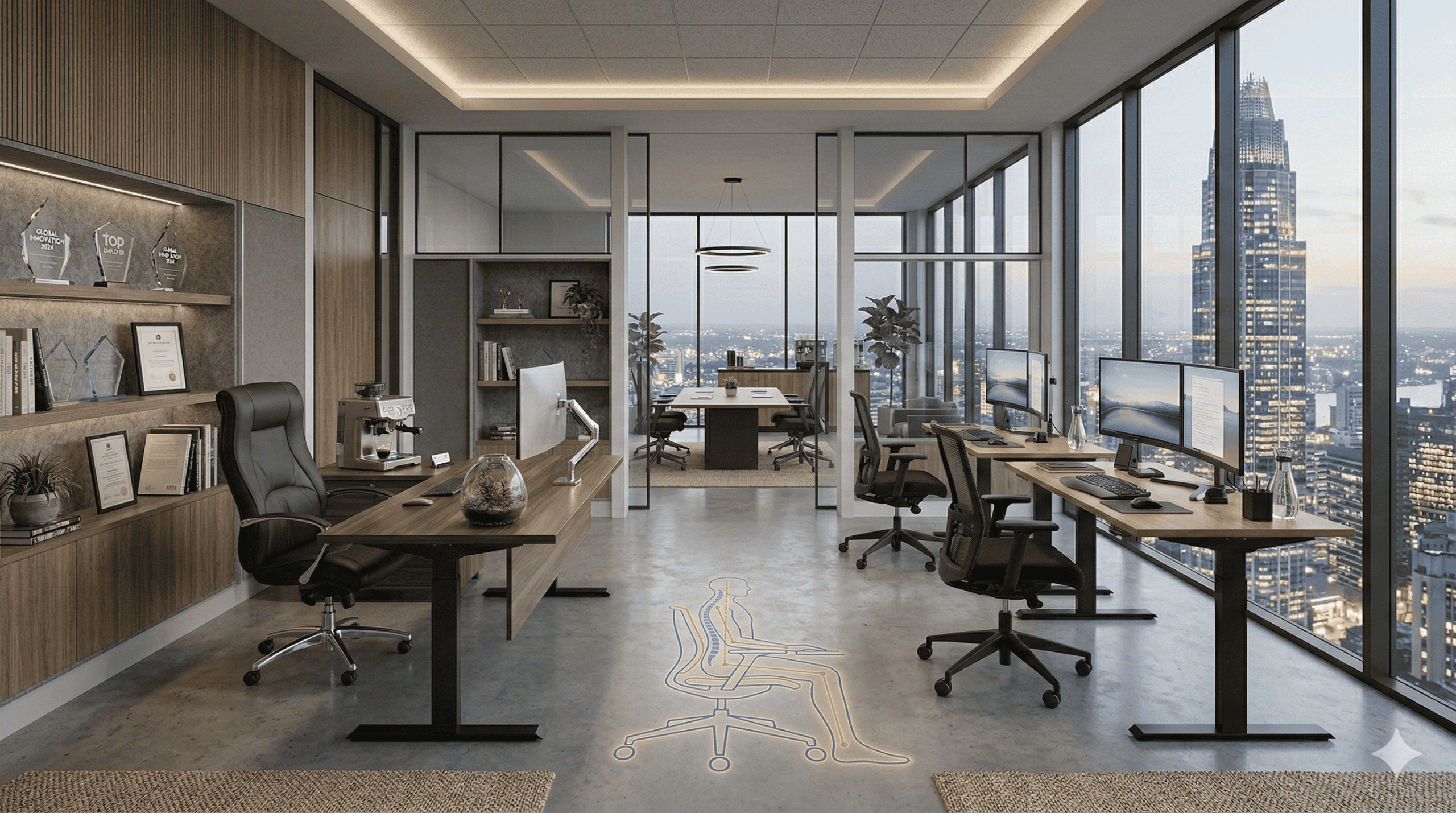
Sit-stand (height-adjustable) desks are now the standard specification in most new Melbourne office fitouts. Electric sit-stand desks allow the user to raise and lower the desk surface at the touch of a button — from seated height to standing height and everywhere in between. The productivity and health case for sit-stand desks is well documented. We covered it in detail in our standing desks vs. traditional desks article, but the short version is: alternating between sitting and standing throughout the day improves energy, reduces musculoskeletal complaints, and keeps people more focused across a full workday.
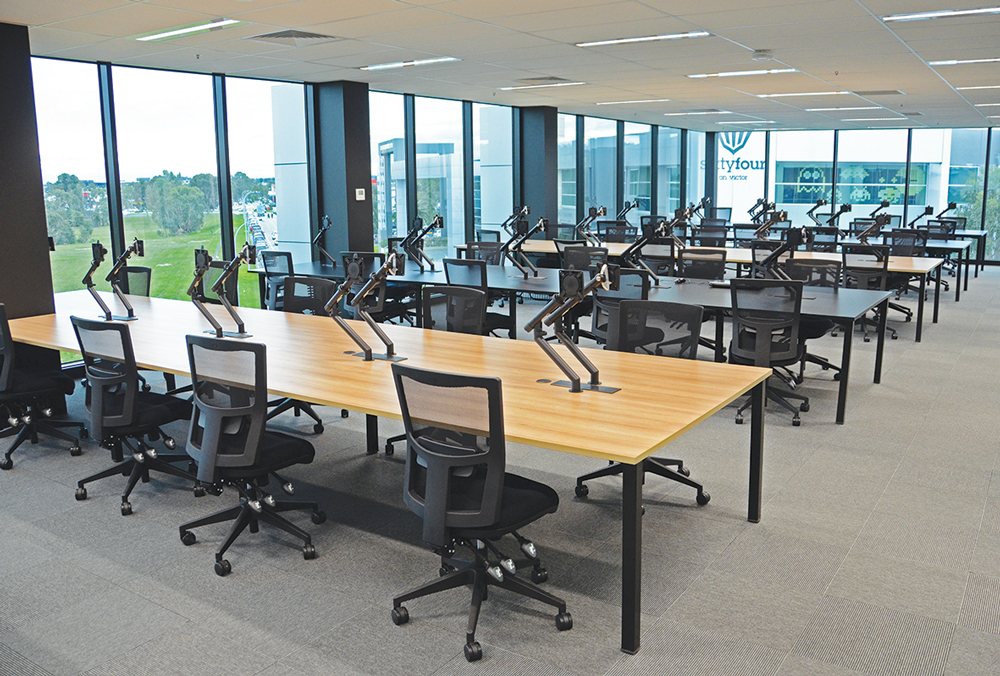
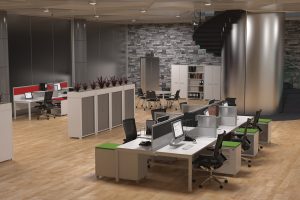
Bench desks — long shared surfaces with multiple workstations side by side — are the most space-efficient configuration for open plan offices. They work well in collaborative environments and make cable management cleaner. The trade-off is less acoustic and visual privacy between workstations.
Corner desks give individuals more surface area and work well in enclosed workstations or private offices. They take up more floor space, so they’re better suited to spacious floor plates.
What to look for in desk quality: surface durability (look for a scratch-resistant, low-maintenance laminate or hardwearing veneer finish), frame stability (steel frames are preferred for commercial use), and — for sit-stand desks — motor quality and stability at standing height. A wobbly desk at standing height is a frustrating daily experience. Test the desk at its maximum height before committing to a bulk purchase.
Cost ranges for Melbourne commercial desks:
- Fixed-height commercial desk: $250–$700 per unit
- Manual crank sit-stand desk: $450–$900 per unit
- Electric sit-stand desk: $750–$2,000+ per unit
- Bench desk systems: $400–$900 per person (varies significantly with configuration)
2. Office Chairs
If there’s one piece of commercial office furniture worth spending proper money on, it’s the chair.
Your team sits in these chairs for 7–9 hours a day. The chair determines whether their back hurts by 3pm. It affects their posture, their concentration, and whether they leave work feeling physically wrecked or physically fine. A good chair protects your team’s health. A bad chair creates WorkCover exposure and sick leave.
What genuinely ergonomic means: a truly ergonomic task chair has lumbar support that adjusts in height and depth, a seat depth adjustment (so people with different leg lengths can use the chair correctly), adjustable armrests (height, width, and pivot), seat height adjustment across a wide enough range to suit different body types, and a back tilt mechanism with tension control.
A chair with a sticker that says “ergonomic” but lacks these actual adjustment features is not genuinely ergonomic. It’s a marketing claim.
Task chairs vs. executive chairs vs. visitor chairs: task chairs are your workstation chairs — the ones your team uses all day. These warrant the most investment. Executive chairs are typically larger, with higher backs and more substantial padding — appropriate for senior leadership spaces. Visitor chairs are used occasionally by guests and don’t need the full ergonomic spec of a task chair, but should still be comfortable for a 30-60 minute meeting.
Testing before bulk purchase is non-negotiable. Chairs that feel comfortable for 10 minutes in a showroom don’t always feel comfortable after four hours of real work. Before committing to a bulk order of 40 or 60 chairs, get a sample of your preferred model and have a few team members use it for a full week. This is standard practice for experienced commercial furniture buyers and it prevents very expensive mistakes.
Cost ranges for Melbourne commercial office chairs:
- Budget commercial task chair: $250–$450
- Mid-range ergonomic task chair: $500–$900
- Premium ergonomic task chair: $900–$2,000+
- Executive chairs: $800–$3,000+
- Visitor and meeting room chairs: $150–$600 per unit
3. Meeting Room Furniture
Meetings are where decisions get made, relationships get built, and clients get impressed or disappointed. The furniture in your meeting rooms needs to work hard.
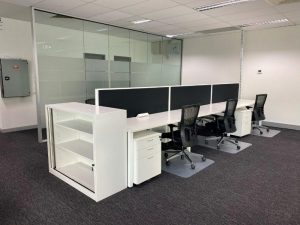
Boardroom tables are the centrepiece of your primary meeting space. Size matters — the table needs to comfortably seat your expected number of people without the room feeling cramped. A general rule: allow approximately 600–700mm of table length per person. A table for 12 people typically needs to be 3.6–4.2 metres long.
Shape matters too. Rectangular tables are traditional and efficient for space use. Oval and boat-shaped tables soften the formality and improve sight lines. Round tables work well for smaller groups and encourage more equal participation.
Material and finish should align with your brand positioning. A high-gloss laminate table works well in modern corporate environments. Timber veneer adds warmth and prestige. Glass-top tables look striking but show every fingerprint and require more maintenance.
Smaller meeting room tables for 4–6 person rooms can be fixed or folding. If your meeting rooms double as training or event spaces, a folding table that stores flat is much more practical than a fixed one.
Meeting room chairs need to be comfortable for sessions that can run 1–3 hours. A chair that’s fine for 20 minutes becomes actively uncomfortable in a long afternoon meeting. Fabric upholstery in a commercial grade, breathable weave is the standard specification. Mesh backs are popular for longer sessions.
Cost ranges for Melbourne meeting room furniture:
- Small meeting table (4–6 person): $600–$2,500
- Medium meeting table (8–10 person): $1,500–$5,000
- Boardroom table (12+ person): $3,000–$15,000+
- Meeting room chairs: $200–$700 per unit
4. Reception and Front of House Furniture
Your reception area is your business’s first physical handshake with every visitor. Before anyone speaks, before anyone presents, the furniture in your reception tells a story about who you are.
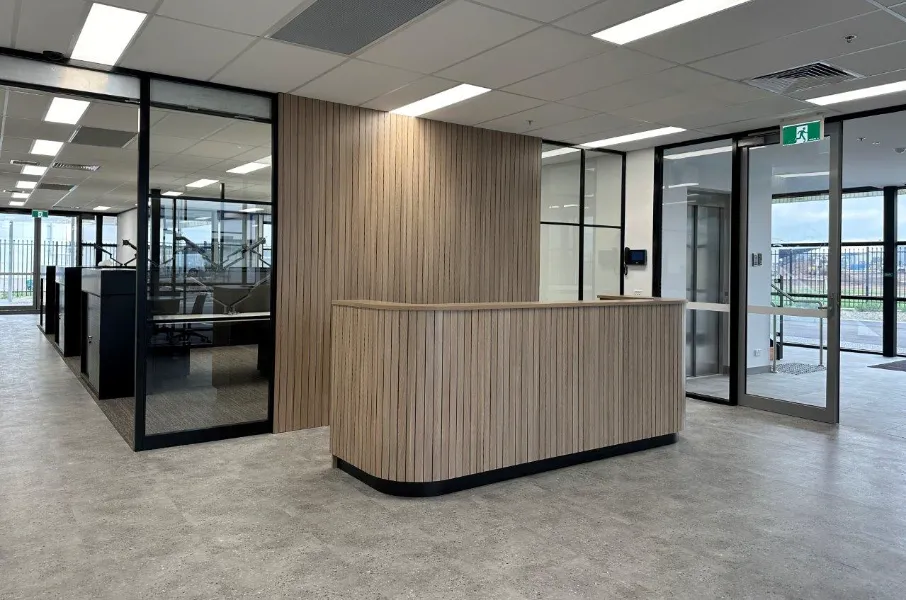
The reception desk is the centrepiece. It needs to work ergonomically for the person behind it (correct working height, adequate storage, cable management) and it needs to look right from the visitor’s perspective. Custom-built reception desks — designed to fit a specific space and reflect a specific brand — make a significantly stronger impression than off-the-shelf options. They cost more, but for most Melbourne businesses, the reception desk is worth the investment.
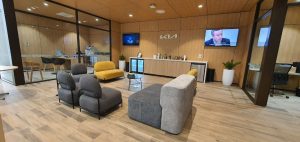
Reception seating gets sat in by visitors, clients, and sometimes employees waiting for meetings. It needs to be comfortable for 10–30 minutes, durable enough to handle high traffic, and visually consistent with the rest of the space. Avoid reception seating that’s too casual or too formal for the context — it creates a disconnect.
What your reception furniture communicates: a law firm with heavy, dark timber and leather seating communicates authority and stability. A tech startup with bright modular sofas and a standing reception desk communicates energy and informality. Neither is wrong — but both are intentional. Make sure your reception furniture choices are intentional too.
Cost ranges for Melbourne reception furniture:
- Off-the-shelf reception desks: $1,500–$5,000
- Custom-built reception desks: $5,000–$20,000+
- Reception seating (per seat): $300–$1,500
- Coffee tables and accessories: $200–$1,000
5. Breakout and Collaborative Furniture
This category has grown enormously in importance in Melbourne office fitouts over the last five years — and for good reason.
The modern office isn’t just a place where people sit at desks. It’s a place where ideas develop, teams connect, and informal conversations happen that move things forward. The furniture that supports those interactions — the lounge areas, the casual meeting zones, the standing collaboration tables — is no longer optional. It’s expected.
Lounge and soft seating creates the informal work environment that complements formal desk setups. Modular sofa systems, armchairs, and ottoman arrangements work well in larger breakout areas. The key is choosing commercial-grade upholstery that handles heavy daily use — residential-grade fabric on a commercial breakout sofa shows wear within a year.
High tables and bar stools create standing collaboration zones where quick informal meetings happen naturally. They’re particularly effective near the kitchen or coffee area — the natural gathering point in any office.
Acoustic booths and privacy pods are one of the fastest-growing categories in Melbourne commercial furniture right now. As open-plan offices have become the norm, the need for small, semi-private spaces for phone calls, video meetings, and focused work has grown with it. A well-placed acoustic pod can dramatically improve both the productivity and the acoustic environment of an open floor.
Modular and reconfigurable furniture — pieces that can be rearranged quickly for different uses — suits environments that need to adapt. Workshop setups, town halls, team training sessions — spaces that need to change regularly benefit enormously from furniture that can change with them.
Cost ranges for Melbourne breakout furniture:
- Lounge chairs and sofas: $600–$3,000+ per piece
- High tables and bar stools: $500–$2,000 per setting
- Acoustic booths and pods: $3,000–$15,000+ depending on size and spec
- Modular collaborative tables: $800–$3,000 per configuration
6. Storage Solutions
Storage is the most underestimated category in office furniture procurement. Businesses consistently underbudget for it, underspec it, and then spend the first six months in their new space complaining that there’s nowhere to put anything.
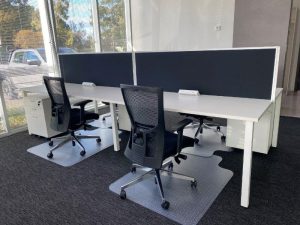
Under-desk pedestals are the primary personal storage solution at individual workstations — usually a three-drawer unit on castors that sits under the desk. For hot-desking environments, lockable pedestals let mobile workers secure their personal items even when they don’t have a permanent desk.
Overhead storage and tambour cupboards sit above or adjacent to workstations and provide shared or individual storage for files, stationery, and equipment. In compact floor plates, overhead storage makes better use of vertical space.
Lockers are standard in activity-based working environments where people don’t have assigned desks. They give mobile workers somewhere to store their laptop bag, personal items, and anything they need to keep at the office.
How much storage does a modern office actually need? The honest answer is: less than a traditional office, but more than most businesses plan for. The move to digital has reduced paper storage needs considerably. But equipment, personal items, shared resources, and office supplies still need a home. Under-plan storage and your team will create their own solutions — usually involving things piled on top of each other and stuffed into corners.
Cost ranges for Melbourne commercial storage:
- Under-desk pedestals: $200–$600 per unit
- Overhead tambour cupboards: $300–$800 per unit
- Locker units (per bank): $800–$3,000 depending on size and spec
7. Executive Office Furniture
Senior leadership spaces communicate authority, prestige, and the values of the business at its highest level. Executive office furniture needs to do that job.
The executive desk is typically larger, with more surface area and integrated storage than a standard workstation. A credenza or side unit is standard in most executive offices — providing storage and a secondary work surface. Sit-stand functionality is increasingly expected at executive level.
Executive chairs sit at the premium end of the task chair range — higher backs, more substantial construction, premium upholstery options. The investment at this level reflects the seniority of the position and the hours spent in the chair.
One shift worth noting in Melbourne’s modern corporate fitouts: executive offices are moving away from heavy, imposing furniture towards pieces that are still clearly premium, but also feel approachable and contemporary. Glass partitions instead of solid walls, lighter timber finishes instead of dark mahogany, clean-lined desks instead of traditional pedestal desks. Authority expressed through quality rather than weight.
Cost ranges for Melbourne executive office furniture:
- Executive desks: $1,500–$6,000+
- Executive chairs: $800–$3,000+
- Full executive office setup (desk, chair, credenza, visitor chairs): $5,000–$20,000+
8. Training Room and Multipurpose Furniture
Not every Melbourne business needs a dedicated training room. But if you run internal training sessions, host workshops, or use a room for both meetings and presentations — the furniture in that space needs to be flexible.
Folding and flip-top tables can be reconfigured in minutes from a classroom layout to a boardroom layout to a U-shape. They stack for compact storage when the room isn’t in use. For a room that serves multiple purposes, this flexibility is worth the slightly higher cost over fixed tables.
Stackable chairs on trolleys make it quick to clear a space entirely when needed. Commercial-grade stackable chairs have improved dramatically in comfort over the last decade — there’s no longer a trade-off between stackability and reasonable seating comfort.
AV and presentation integration affects furniture choices in training rooms too. Where will the screen be? Does the table layout work with the sight lines to the screen? Is there enough power at each workstation position for laptops? These questions are worth working through before you order.
Key Things to Evaluate Before You Commit
Ergonomics — This Is Non-Negotiable
Australian workplace health and safety legislation requires employers to provide a safe working environment. Poor ergonomics is a real WHS risk — and a real financial risk through WorkCover claims and lost productivity.
When evaluating commercial office furniture for Melbourne workplaces, look for products that meet or exceed Australian ergonomic standards for office furniture. The key standard for seating is AS/NZS 4438. For desks, look for adjustability ranges that accommodate the full range of your workforce’s body types and heights.
An ergonomic assessment — either through your fitout consultant or a workplace ergonomist — before you finalise your furniture spec can identify needs you haven’t considered and prevent problems that would show up later as complaints and claims.
Durability and Warranty — Ask the Hard Questions
A furniture warranty that sounds good often isn’t what it seems. Here’s what to look for and what to ask:
Commercial furniture warranties should cover at minimum 5 years for structural components (frames, mechanisms) and 2–3 years for upholstery and surfaces. Anything shorter than this on a product marketed as commercial grade is a warning sign.
Ask specifically: what does the warranty cover? What voids it? Who handles warranty claims — the dealer or the manufacturer? How long does a warranty repair or replacement typically take? These questions separate suppliers who stand behind their products from those who don’t.
Usage cycle ratings tell you how many cycles a mechanism has been tested to. For task chairs, 100,000 tilt cycles is a baseline commercial standard. For sit-stand desk mechanisms, 5,000–10,000 lift cycles is a reasonable minimum. Ask for these figures and compare them across products at similar price points.
Aesthetics and Brand Alignment
Every piece of furniture in your office sends a message about your business. The question is whether it’s sending the right one.
A financial planning firm with sleek, premium, understated furniture communicates stability and professionalism. A creative agency with bold colours, eclectic furniture, and unconventional layouts communicates creativity and energy. A healthcare practice with clean, simple, calming furniture communicates care and trust.
None of these are right or wrong. But they’re all intentional. When businesses don’t think about brand alignment in furniture selection, they end up with spaces that feel generic — offices that could belong to anyone, and therefore belong to no one.
Consistency across the floor matters more than any individual piece. A beautiful custom reception desk surrounded by mismatched chairs and tired workstations creates a jarring impression. The whole space needs to tell a coherent story.
Flexibility and Future-Proofing
Melbourne businesses change. Teams grow. Working models evolve. The furniture you buy today needs to be able to flex with those changes.
Modular workstation systems that can be extended, reconfigured, or supplemented without replacing everything are a better investment than fixed configurations that lock you in. Chairs and desks from ranges that are likely to remain in production for 5–10 years can be added to as the team grows.
If you’re moving into a new space with some uncertainty about exactly how you’ll use it — which is more common than most businesses admit — buying some modular and flexible pieces initially and filling in the detail over time is a sensible approach.
Sustainability and Environmental Credentials
Sustainability in commercial furniture has moved from a nice-to-have to a genuine procurement consideration for a growing number of Melbourne businesses.
What to look for: recycled content in frame materials and upholstery, low-VOC finishes and adhesives (important for indoor air quality in your new space), sustainable timber sourcing (FSC or PEFC certified), and end-of-life programs — suppliers who offer takeback, refurbishment, or recycling options when furniture reaches the end of its life.
Certifications worth looking for: GREENGUARD Gold for indoor air quality (important for enclosed office environments), AFRDI (Australasian Furniture Research and Development Institute) for structural testing standards, and GECA (Good Environmental Choice Australia) for broader environmental credentials.
For Melbourne businesses pursuing Green Star or NABERS ratings for their office space, sustainable furniture selection contributes to points under materials and indoor environment quality credits.
Where to Buy Commercial Office Furniture in Melbourne
Option 1: Through a Commercial Fitout Company
If you’re doing a full office fitout, this is usually the most efficient path. A fitout company that handles furniture supply alongside design and construction can integrate the two seamlessly — your furniture selection informs the space plan, the construction is designed around the furniture, and the whole project is managed by one team.
The practical advantage is significant. You’re not coordinating between a fitout contractor and a separate furniture supplier trying to get their deliveries to happen in the right sequence. One team manages all of it.
This is the approach Progressive Corporate takes — design, build, and furniture supply under one roof, so clients have a single point of contact from brief to handover.
Option 2: Commercial Furniture Showrooms
Melbourne has a strong network of commercial furniture showrooms — particularly in the inner suburbs and CBD fringe — where you can see and test products before committing.
Showrooms are particularly valuable for chairs (where you absolutely should test before buying in bulk), for high-value pieces like boardroom tables and reception desks, and for seeing finishes and materials in person rather than on a screen.
When visiting showrooms, bring your floor plan. Good commercial furniture consultants will use your floor plan to help you select pieces that work in your specific space — not just pieces that look good on the showroom floor.
Option 3: Online Commercial Furniture Suppliers
Online purchasing works well for supplementary items, accessories, and repeat purchases of products you already know. It’s also useful for price comparison once you’ve identified specific products you’re considering.
What to watch for online: residential products marketed with language that sounds commercial but isn’t. If a desk doesn’t specify a commercial warranty and usage rating, assume it’s residential grade.
For bulk workstation purchases, chairs, and any custom items — see the product in person before ordering.
Option 4: Second-Hand and Refurbished Commercial Furniture
Good quality second-hand commercial furniture is genuinely worth considering, particularly for budget-conscious Melbourne businesses or startups fitting out their first office.
The Melbourne commercial furniture resale market has good stock — particularly after major office relocations and CBD building upgrades when quality furniture comes out of large corporate fitouts at a fraction of its original cost.
What to inspect before buying used: check mechanisms on chairs (sit in them, test every adjustment), check desk surface condition (scratches and stains in laminate surfaces can’t be repaired), check that storage units open and close properly, and check that sit-stand desk motors still work smoothly across the full height range.
Refurbished furniture — commercial pieces that have been professionally cleaned, repaired, and re-upholstered — is a particularly good option. The bones of good commercial furniture last for decades. A quality Herman Miller or Steelcase chair from ten years ago, refurbished, will outperform a brand-new budget chair bought new.
The Furniture Procurement Process — How to Do It Without the Headaches
Step 1: Finalise Your Space Plan First
No exceptions here. Furniture procurement that starts without a confirmed floor plan produces the wrong quantities, the wrong sizes, and configurations that don’t fit the space. Get the plan confirmed before you get serious about furniture selection.
Step 2: Build a Furniture Schedule
A furniture schedule is a room-by-room list of every piece of furniture required — item name, quantity, dimensions, specification, and any finish or colour requirements. It’s the document that drives accurate and comparable quoting.
Most businesses doing a commercial fitout have never built a furniture schedule before. A good fitout company or furniture consultant will produce one for you as part of the design process. If you’re procuring furniture independently, it’s worth investing the time to build one — it makes every subsequent step of the process cleaner and faster.
Step 3: Get Multiple Quotes — And Compare Them Properly
Commercial furniture quotes vary enormously — not just in price but in what they include. Quote A might include delivery and installation. Quote B might not. Quote A might be quoting a product with a five-year commercial warranty. Quote B might be quoting something that looks similar but has a two-year residential warranty.
When you get quotes, ask every supplier to quote against the same furniture schedule with the same specifications. Ask what’s included in the quote — delivery, installation, removal of packaging, and any make-good if something arrives damaged. Get warranty terms in writing.
The cheapest quote that gets you commercial-grade furniture properly installed and warranted is a better deal than a cheaper quote that doesn’t include installation and skimps on warranty.
Step 4: Test Key Items Before You Commit
Chairs — always. Before any bulk chair purchase for a Melbourne office, get a sample and have several team members use it for a full working week. Different body types experience chairs differently. A chair loved by a 165cm team member might not work for someone who is 190cm.
For high-value statement pieces — reception desks, boardroom tables — visit the showroom or ask for a sample of the finish material before approving the order.
Step 5: Coordinate Delivery and Installation With Your Fitout Timeline
This is where furniture procurement most commonly goes wrong. Furniture arrives before the fitout is complete and there’s nowhere to put it. Or the fitout is finished and the furniture is still four weeks away.
Work backwards from your planned move-in date. Allow time for installation of furniture after fitout handover — a 50-workstation office installation typically takes 2–3 days. Order furniture so it arrives in a staged, coordinated sequence — workstations before chairs, ancillary storage after primary furniture.
Your fitout project manager and furniture supplier need to be in communication about the programme. If you’re using the same company for both, this happens automatically.
Step 6: Post-Installation Review
When installation is complete, walk every room against your furniture schedule. Check quantities, check condition, check that everything is in the right location. Any damage or discrepancy should be logged and reported to your supplier promptly — most commercial furniture warranties require defects to be reported within a specific timeframe.
Once the team moves in, give it two to four weeks and then check in on how things are feeling. Are the chairs working for everyone? Are the sit-stand desks being used? Is there enough storage? Early feedback while the supplier relationship is still fresh is easier to act on than feedback that comes six months later.
Office Furniture Cost Guide for Melbourne Businesses
Here’s a practical reference for budgeting purposes. These are indicative ranges only — actual costs vary based on product specification, supplier, and project size.
By category:
Workstations (fixed height): $250–$700 per unit. Sit-stand electric: $750–$2,000 per unit. Task chairs (mid-range ergonomic): $500–$900 per unit. Meeting tables (4–6 person): $600–$2,500. Boardroom tables (12+ person): $3,000–$15,000+. Meeting room chairs: $200–$700 per unit. Reception desks (custom): $5,000–$20,000+. Breakout lounge per zone: $3,000–$10,000+. Storage pedestals: $200–$600 per unit. Executive desk setups: $5,000–$20,000+.
Total furniture budget benchmarks by office size:
Small office under 20 workstations: $60,000–$150,000 total furniture budget depending on specification level.
Medium office of 20–60 workstations: $150,000–$450,000 depending on specification, meeting room count, and reception requirements.
Large office of 60+ workstations: $400,000–$1,000,000+ depending on full scope including executive offices, multiple meeting rooms, and premium breakout areas.
These numbers are real. They’re not inflated to impress or deflated to attract clicks. Commercial office furniture for Melbourne businesses at a proper commercial specification costs real money. Businesses that go in expecting residential pricing for commercial products end up either compromising on quality or blowing their budget on surprises.
Common Furniture Buying Mistakes Melbourne Businesses Make
Buying furniture before the floor plan is confirmed. The number one cause of furniture that doesn’t fit, configurations that don’t work, and quantities that are wrong.
Prioritising aesthetics over ergonomics. A beautiful chair that hurts your team’s backs by 2pm is a bad investment at any price.
Skipping chair testing. Buying 50 task chairs without anyone sitting in them for a real workday is gambling with a significant budget line.
Forgetting delivery and installation costs. These can add 10–20% to your furniture spend. Get them in the quote upfront.
Choosing residential furniture for commercial use. It looks the same and costs less. Until it falls apart in 18 months.
Ignoring cable management. A workstation that looks great but has cables running everywhere is a daily frustration and a tripping hazard. Cable management is part of the desk decision, not an afterthought.
Ordering too late. Custom and made-to-order pieces take 8–14 weeks. Standard stock items can still take 4–6 weeks. Start earlier than you think you need to.
Not getting warranty terms in writing. A verbal assurance about warranty coverage isn’t worth anything when something goes wrong.
Ready to Furnish Your Melbourne Office? Let’s Make It Easy.
At Progressive Corporate, we supply commercial office furniture to Melbourne businesses every day — from small professional offices in the suburbs to large corporate fitouts in the city. We’ve been doing it for over 27 years, and we have a showroom in Knoxfield where you can come in, sit in chairs, see desk finishes in person, and talk through your specific requirements with someone who knows what they’re talking about.
We cover everything — workstations, sit-stand desks, task chairs, meeting room furniture, reception setups, breakout furniture, storage, and executive offices. And because we also handle full office fitouts, we can integrate your furniture selection with your fitout design and construction, so everything arrives at the right time and goes in the right place.
If you’re planning a new office, a refurbishment, or even just a workstation upgrade — come and talk to us. Bring your floor plan if you have one. Tell us your budget. We’ll give you honest advice about what’s possible and help you make decisions you’ll be happy with for years.
📞 (03) 7018 0761 📧 sales@progressiveoffice.com.au 📍 1 Forbes Close, Knoxfield VIC 3180
Your team deserves a workspace that works. Let’s build it together.